
The world of monarchs offers a compelling look into the lives of crowned rulers from various nations. Famous rulers like Elizabeth II, Alexander the Great, and Henry VIII of England have shaped history with their leadership and achievements. This collection of historical figures provides insight into the lives and reigns of distinguished monarchs. You'll learn what propelled them to fame, highlighting accomplishments and contributions. From conquerors to pioneers, each has left a lasting imprint on generations. Elizabeth II's reign has seen significant cultural and technological advancements. Alexander the Great carved out one of history's largest empires with military prowess and strategic genius. Henry VIII's love life and radical reforms altered English society. These leaders are renowned historical rulers. By exploring their achievements and legacies, this narrative offers a window into the lives of influential rulers who have redefined global events. Exploring international sovereigns deepens our appreciation for their impact and enlivens our curiosity about the history surrounding their reigns. Immerse yourself in the tales of these extraordinary monarchs on a fascinating voyage through time.
About this list
- 1
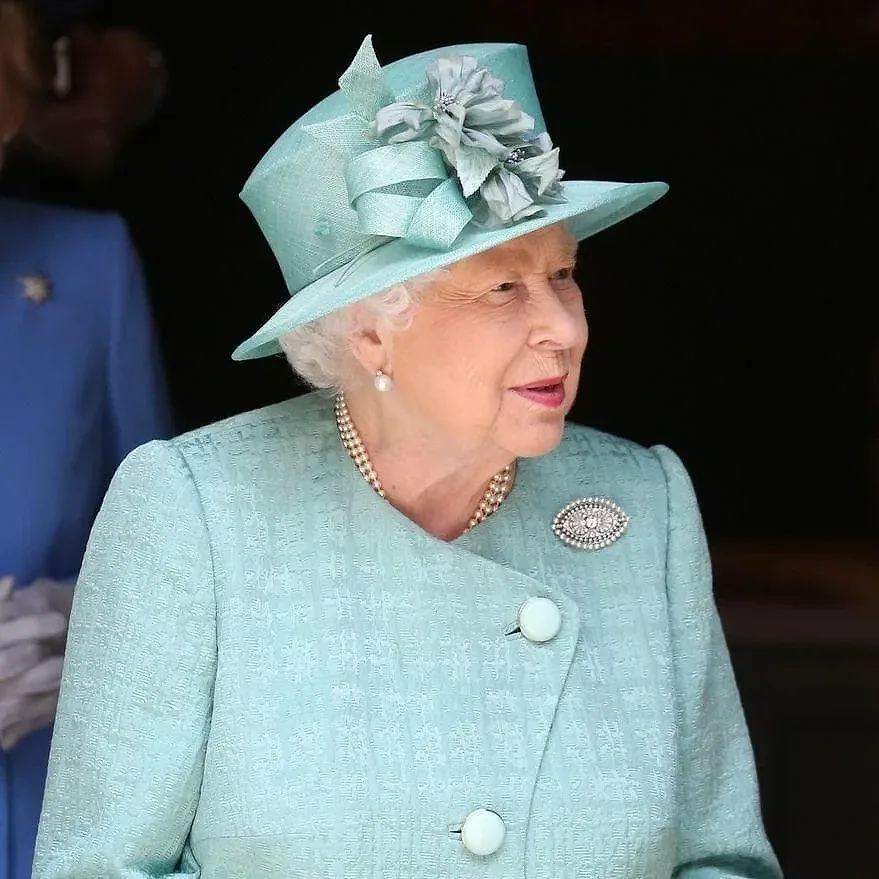
Elizabeth II was born April 21, 1926, in London as Elizabeth Alexandra Mary Windsor. She took the throne in 1952 and remains one of the most recognized monarchs in British history. The Duke and Duchess of York, King George VI and Queen Elizabeth (the Queen Mother), were her first children. No one expected Elizabeth to become queen at her birth. Fate changed things when her uncle, King Edward VIII, abdicated in 1936, making her father the king and positioning Elizabeth as the heir.
0 - 2

Alexander III of Macedon (Greek: Αλέξανδρος Γʹ ὁ Μακεδών; 20/21 July 356 BC – 10/11 June 323 BC), known as Alexander the Great (Ancient Greek: Ἀλέξανδρος ὁ Μέγας, romanized: Aléxandros ho Mégas), was a king (basileus) of the ancient Greek kingdom of Macedon and part of the Argead dynasty. He was born in Pella in 356 BC. He took the throne from his father, Philip II, at age 20. Alexander spent most of his rule on a huge military campaign through Asia and northeast Africa. By age thirty, he built one of the largest empires of the ancient world.
0 - 3

Juan Carlos I (Spanish: [xwaŋˈkaɾlos]; Juan Carlos Alfonso Víctor María de Borbón y Borbón-Dos Sicilias, born 5 January 1938) was a member of the Spanish royal family. He reigned as King of Spain from 1975 until he abdicated in 2014. Juan Carlos is the grandson of Alfonso XIII, the last king of Spain before the monarchy ended in 1931 and the Second Spanish Republic began. Juan Carlos was born in Rome, Italy, during his family's exile. Generalísimo Francisco Franco, the Spanish dictator, started the civil war by using a coup d'état against the constitution.
0 - 4

Henry VIII (28 June 1491 – 28 January 1547) was King of England from 1509 until his death in 1547. He was the second Tudor monarch, succeeding his father Henry VII. Henry gained fame for his six marriages. He focused on getting his first marriage, to Catherine of Aragon, annulled. His dispute with the Pope over the annulment caused Henry to start the English Reformation, separating the Church of England from papal power. He made himself the Supreme Head of the Church of England and dissolved convents and monasteries, earning excommunication.
0 - 5

Ivan IV Vasilyevich (; Russian: Ива́н Васи́льевич, tr. Ivan Vasilyevich; 25 August 1530 – 28 March [O.S. 18 March] 1584), known as Ivan the Terrible (Russian: Ива́н Гро́зный , Ivan Grozny; "Ivan the Formidable" or "Ivan the Fearsome"), was the Grand Prince of Moscow from 1533 to 1547. He became the first Tsar of Russia from 1547 to 1584. Ivan was the crown prince of Vasili III, the Rurikid ruler of the Grand Duchy of Moscow. He was made Grand Prince at age three after his father died. Ivan was proclaimed Tsar (Emperor) of All Rus' in 1547 at seventeen, establishing
0 - 6

Nicholas II, or Nikolai II Aleksandrovich (Russian: Никола́й II Алекса́ндрович, tr. Nikolai II Aleksandrovich), lived from May 18, 1868, to July 17, 1918. He was Saint Nicholas the Passion-Bearer in the Russian Orthodox Church. He became the last Emperor of Russia, ruling from November 1, 1894, until he was forced to abdicate on March 15, 1917. His reign ended with the Russian Empire collapsing from a top world power into economic and military ruin. He offered small support to economic and political reforms pushed by aides Sergei Witte and Pyotr Stolypin, but the aristocrats pushed back too hard.
0 - 7

Louis XIV (Louis Dieudonné; September 5, 1638 – September 1, 1715) became King of France on May 14, 1643, and died in 1715. Known as Louis the Great or the Sun King (le Roi Soleil), his reign lasted 72 years and 110 days. This period is the longest recorded for any monarch in a sovereign country in European history. Louis XIV began his personal rule of France in 1661, following the death of his chief minister, Cardinal Mazarin. Louis XIV followed the idea of the divine right of kings.
0 - 8

Peter the Great (Russian: Пётр Вели́кий, tr. Pyotr Velikiy, IPA: [ˈpʲɵtr vʲɪˈlʲikʲɪj]), also known as Peter I (Russian: Пётр I, tr. Pyotr I, IPA: [ˈpʲɵtr ˈpʲɛrvɨj]) or Peter Alexeyevich (Russian: Пётр Алексе́евич, IPA: [ˈpʲɵtr ɐlʲɪˈksʲejɪvʲɪtɕ]), ruled the Tsardom of Russia and later the Russian Empire from May 7, 1682, until his death in 1725. He jointly ruled with his elder half-brother, Ivan V, before 1696. Through many successful wars, Peter expanded the Tsardom into a much larger empire, making it a major European power.
0 - 9

George VI (Albert Frederick Arthur George; December 14, 1895 – February 6, 1952) was King of the United Kingdom and the Dominions of the British Commonwealth from December 11, 1936, until his death on February 6, 1952. George VI became a symbol of Britain's fight to win World War II against Germany. Family and close friends called him "Bertie." George VI was born during the reign of his great-grandmother Queen Victoria and was named after his great-grandfather, Albert, Prince Consort. As the second son of King George V, he did not expect to inherit the throne, and he spent his early years...
0 - 10

Queen Victoria, born Alexandrina Victoria on May 24, 1819, reigned as Queen of the United Kingdom of Great Britain and Ireland from June 20, 1837, until her death on January 22, 1901. Her rule, the Victorian era, involved major changes in industry, culture, politics, science, and the military across the United Kingdom. Victoria took the throne at just 18 years old after her uncle, King William IV, died. Her reign lasted over six decades, making it the second longest in British history. Victoria's rule marked the expansion of the British Empire.
0 - 11

Alexander II (Russian: Алекса́ндр II Никола́евич, tr. Aleksandr II Nikolayevich, IPA: [ɐlʲɪˈksandr ftɐˈroj nʲɪkɐˈlajɪvʲɪtɕ]; April 29, 1818 – March 13, 1881) ruled Russia as Emperor from March 2, 1855, until his assassination on March 13, 1881. He also held the title of King of Poland and Grand Duke of Finland. Alexander's major reform was freeing Russia's serfs in 1861. People call him Alexander the Liberator (Russian: Алекса́ндр Освободи́тель, tr. Aleksandr Osvoboditel, IPA: [ɐlʲɪˈksandr ɐsvəbɐˈdʲitʲɪlʲ]). The tsar enacted other reforms, including reo
0 - 12

Peter III (born 21 February [O.S. 10 February] 1728 – died 17 July [O.S. 6 July] 1762) was Russia's Emperor for six months in 1762. He became Charles Peter Ulrich of Schleswig-Holstein-Gottorp in Kiel. His parents were Charles Frederick, Duke of Holstein-Gottorp (son of Hedvig Sophia of Sweden, sister of Charles XII), and Anna Petrovna (Peter the Great's elder surviving daughter). The German Peter struggled to speak Russian and followed a firm pro-Prussian policy.
0 - 13

Princess Beatrix of the Netherlands (Beatrix Wilhelmina Armgard; Dutch pronunciation: [ˈbeːjaːtrɪks ˌʋɪlɦɛlˈminaː ˈʔɑrmɡɑrt]) was a member of the Dutch Royal House. She reigned as Queen of the Netherlands from 30 April 1980 until she abdicated on 30 April 2013. Beatrix is the eldest daughter of Queen Juliana and Prince Bernhard of Lippe-Biesterfeld. She became heir presumptive when her mother took the throne in 1948. Beatrix attended a public primary school in Canada during World War II. She finished her primary and secondary education in the Netherlands.
0 - 14

Henry VII (Welsh: Harri Tudur; January 28, 1457 – April 21, 1509) was King of England and Lord of Ireland after taking the crown on August 22, 1485 until his death. Henry became the first monarch of the House of Tudor. His forces defeated King Richard III at the Battle of Bosworth Field, the end of the Wars of the Roses. Henry was the last king of England to win his throne on a battlefield. He secured his claim by marrying Elizabeth of York, daughter of Richard's brother Edward IV. Henry restored power and stability to England.
0 - 15

Henry VI (December 6, 1421 – May 21, 1471) was King of England from 1422 to 1461 and again from 1470 to 1471. He was also the disputed King of France from 1422 to 1453. Henry was the only child of Henry V. He succeeded to the English throne at nine months old after his father died. He succeeded to the French throne after his maternal grandfather Charles VI died. Henry inherited the Hundred Years' War (1337–1453), where his uncle Charles VII challenged his claim to the French throne. Henry remains the only English monarch crowned King of France (as Henry II).
0 - 16

George III (George William Frederick; June 4, 1738 – January 29, 1820) ruled Great Britain and Ireland as King from October 25, 1760, until the two countries united on January 1, 1801. After that, he became King of the United Kingdom of Great Britain and Ireland until his death in 1820. He also held the title of Duke and prince-elector of Brunswick-Lüneburg ("Hanover") in the Holy Roman Empire before becoming King of Hanover on October 12, 1814. George III was the third British monarch of the House of Hanover, and he was born in Great Britain and spoke English as his first language.
0 - 17

Catherine II (Russian: Екатери́на Алексе́евна, romanized: Yekaterina Alekseyevna; born 2 May [O.S. 21 April] 1729 – died 17 November [O.S. 6 November] 1796), known as Catherine the Great (Екатери́на Вели́кая, Yekaterina Velikaya), was Empress of Russia from 1762 to 1796. She became the country's longest-ruling female leader. She took power after organizing a coup d'état that overthrew her husband, Peter III. Under her rule, Russia grew larger and stronger, earning recognition as a major European power.
0 - 18

Harald V (Norwegian: [ˈhɑrɑl]; born 21 February 1937) is the King of Norway. He became king when his father, King Olav V, died on 17 January 1991. Harald was the third child and only son of King Olav V and Princess Märtha of Sweden. He was second in line of succession when he was born, behind his father. During the German occupation in 1940, the royal family went into exile. Harald spent time in Sweden and the United States during his childhood. He returned to Norway in 1945 and studied at the University of Osl.
0 - 19

Alfred the Great (Old English: Ælfrēd, Ælfrǣd) lived between 847 and 849, dying on October 26, 899. Alfred was King of Wessex from 871 to about 886 and King of the Anglo-Saxons from about 886 to 899. He was the youngest son of King Æthelwulf of Wessex. His father died young, and three of Alfred's brothers—Æthelbald, Æthelberht, and Æthelred—reigned in turn. After taking the throne, Alfred fought Viking invasions for several years. He won a key victory at the Battle of Edington in 878 and made an agreement with the Vikings, creating the Danelaw.
0 - 20

Charles I (19 November 1600 – 30 January 1649) ruled the three kingdoms of England, Scotland, and Ireland from 27 March 1625 until his execution in 1649. Charles was born into the House of Stuart as the second son of King James VI of Scotland. After his father inherited the English throne in 1603, Charles moved to England and lived most of his life there. He became heir apparent to the thrones of England, Scotland, and Ireland after his elder brother, Henry Frederick, Prince of Wales, died in 1612. An unsuccessful and unpopular attempt to marry him to the Spanish...
0 - 21

Henry V (September 16, 1386 – August 31, 1422), also Henry of Monmouth, ruled England from 1413 until his death in 1422. Henry was the second English monarch of the House of Lancaster. Henry's major military wins in the Hundred Years' War against France made England a top military power in Europe. His famous victory at the Battle of Agincourt in 1415 shows this. Shakespeare immortalized Henry in his plays; he is known as a great warrior king of medieval England.
0 - 22

Haile Selassie I (Ge'ez: ቀዳማዊ ኃይለ ሥላሴ, romanized: qädamawi haylä səllasé, Amharic pronunciation: [ˈhaɪlə sɨlˈlase] (listen); born Lij Tafari Makonnen Woldemikael; July 23, 1892 – August 27, 1975) served as an Ethiopian regent from 1916 to 1930 and emperor from 1930 to 1974. He is a key figure in modern Ethiopian history. Selassie, a member of the Solomonic dynasty tracing his line to Emperor Menelik I, led Ethiopia to become a United Nations charter member due to his internationalist views. At the 1936 League of Nations, he condemned Italy's use of chemical weapons against its people.
0 - 23

Paul I (Russian: Па́вел I Петро́вич; Pavel Petrovich) (October 1, 1754 – March 23, 1801) was Emperor of Russia from 1796 to 1801. Paul was officially the only son of Peter III and Catherine the Great. Catherine suggested Paul had Sergei Saltykov as a father, who shared Romanov blood from the first Romanov tsar's sister, Tatiana Feodorovna Romanova. Paul remained overshadowed by his mother most of his life. His four-year reign ended with assassination by conspirators. Paul adopted the laws of success.
0 - 24

Charles II (May 29, 1630 – February 6, 1685) was king of England, Scotland, and Ireland. Charles II became king of Scotland in 1649 until he was deposed in 1651, and he ruled England, Scotland, and Ireland from the 1660 Restoration until his death. Charles II was the eldest surviving child of Charles I of England, Scotland, and Ireland and Henrietta Maria of France. After Charles I's execution at Whitehall on January 30, 1649, during the English Civil War's peak, the Parliament of Scotland named Charles II king on February 5, 1649. England entered the period known as the English.
0 - 25

Edward III (November 13, 1312 – June 21, 1377) was King of England and Lord of Ireland from January 1327 until his death. Edward III gained military success and restored royal authority after his father Edward II's failed rule. Edward III made the Kingdom of England a major military power in Europe. His fifty-year reign was the second longest in medieval England, following Henry III. This period brought key changes to laws and government, especially the English parliament.
0 - 26

Haakon VII (Norwegian pronunciation: [ˈhoːkɔn]) was born Christian Frederik Carl Georg Valdemar Axel on 3 August 1872 and died on 21 September 1957. Haakon became King of Norway in November 1905 and held the title until his death in September 1957. Prince Carl of Denmark, the second son of Frederick VIII of Denmark and Louise of Sweden, was Haakon's original identity. He studied at the Royal Danish Naval Academy and served in the Royal Danish Navy. After the union between Sweden and Norway ended in 1905, Prince Carl received the offer for the Norwegian crown. He accepted the offer after a November plebiscite and became King.
0 - 27

Cime is a military commander in the Sacred Band of Stepsons universe and the Thieves' World shared fictional universe. In the Sacred Band of Stepsons universe, Cime starts as a Free Agent (sorcerer-slayer). She later becomes the wife of Askelon of Meridian. Next, she is the Evening Star of Lemuria. As Evening Star of Lemuria, she rules the island citadel with Tempus. She commands all its armed forces and Lemuria's arcane windows, allowing her to move her forces through place and time.
0 - 28

Francis I (French: François Ier; Middle French: Francoys; 12 September 1494 – 31 March 1547) ruled France from 1515 until his death in 1547. Charles, Count of Angoulême, and Louise of Savoy were his parents. He took the throne after his cousin and father-in-law Louis XII, who died without a son. Francis, a great patron of the arts, started the French Renaissance. He drew Italian artists to the Château de Chambord. Leonardo da Vinci worked there, bringing the Mona Lisa, which Francis owned. Francis' rule brought major cultural shifts with the rise of absolute monarchy.
0 - 29

Margrethe II was born on 16 April 1940. She is the Queen of Denmark and the supreme authority of the Church of Denmark. She also served as Commander-in-Chief of the Danish Defence. Margrethe came from the House of Glücksburg, a royal house with roots in Northern Germany. She was the eldest child of Frederick IX of Denmark and Ingrid of Sweden. In 1953, a constitutional amendment allowed women to inherit the throne, making her the heir presumptive to her father. Margrethe succeeded her father on 14 January 1972. She became the first female monarch of Denmark since Margrethe I, ruler of t
0 - 30

Alexander III (Russian: Алекса́ндр III Алекса́ндрович, tr. Aleksandr III Aleksandrovich; 10 March [O.S. 26 February] 1845 – 1 November [O.S. 20 October] 1894) became Emperor of Russia, King of Poland, and Grand Duke of Finland in 1881. He held this position until his death on 1 November [O.S. 20 October] 1894. Alexander III was highly reactionary. He reversed some liberal reforms from his father, Alexander II. Under Konstantin P. Pobedonostsev (1827-1907), Alexander III opposed any reform limiting his autocratic rule. During Alexander's reign, Russia fought no major wars, and he was there.
0 - 31

Henry IV (April 15, 1367 – March 20, 1413), also Henry Bolingbroke, became King of England from 1399 to 1413. He claimed the Kingdom of France for his grandfather, King Edward III, a maternal grandson of Philip IV of France. John of Gaunt (Edward III's fourth son) and Blanche of Lancaster were Henry's parents. John held significant sway during much of his nephew King Richard II's reign, whom Henry eventually removed. Henry established the Lancaster branch of the House of Plantagenet. He became the first King of England since the Norman Conquest.
0 - 32

Olav V (Prince Alexander of Denmark; July 2, 1903 – January 17, 1991) ruled Norway from 1957 until his death. King Haakon VII of Norway and Maud of Wales gave Olav the only child. His father became King of Norway in 1905, making Olav heir apparent. Olav became the first heir to the Norwegian throne raised in Norway since Olav IV in the fourteenth century. His parents ensured Olav received a Norwegian upbringing. He attended civilian and military schools preparing for his role. Olav married his first co in 1929.
Also ranks #132 on Famous Athletes from Norway
0 - 33

David (Hebrew: דָּוִד) appears in the Hebrew Bible as the third king of the United Kingdom of Israel and Judah, succeeding Ishbaal. The biblical story shows David, a young shepherd, gaining fame as a musician before killing the enemy champion Goliath. David became a favorite of King Saul and a close friend of Saul's son Jonathan. Saul turned against David because he feared David was trying to seize the throne. After Saul and Jonathan died in battle, David was anointed King. David conquered Jerusalem, brought the Ark of the Covenant into the city, and established the kingdom founded b
0 - 34

James VI and I (James Charles Stuart; June 19, 1566 – March 27, 1625) became King of Scotland in 1567. On March 24, 1603, James became King of England and Ireland through the union of the Scottish and English crowns. Scotland and England remained separate states with their own parliaments, courts, and laws. James ruled both through a personal union. James was the son of Mary, Queen of Scots, and a great-great-grandson of Henry VII, King of England and Lord of Ireland.
0 - 35

Napoleon III (born Charles-Louis Napoléon Bonaparte; April 20, 1808 – January 9, 1873), Napoleon I's nephew, became the first President of France, ruling from 1848 to 1852, and the last monarchical ruler from 1852 to 1870. He won the election for the French Second Republic in 1848 and seized power in 1851 when he could not be re-elected, becoming the Emperor of the French. Napoleon III founded the Second French Empire and remained its only emperor until the French army lost and Prussia and its allies captured him in the Franco-Prussian War in 1870.
0 - 36

Moshoeshoe II (May 2, 1938 – January 15, 1996), formerly Constantine Bereng Seeiso, served as the paramount chief of Lesotho. He succeeded paramount chief Seeiso in 1960. Lesotho gained full independence from Britain in 1966. Moshoeshoe II was king of Lesotho from 1966 until his exile in 1990, and again from 1995 until his death in 1996.
Also ranks #10 on Famous Ampleforth College Alumni
0 - 37

George Tupou V (Tongan: Siaosi Tupou, full name: Siaosi Tāufaʻāhau Manumataongo Tukuʻaho Tupou; May 4, 1948 – March 18, 2012) became King of Tonga after his father, Tāufaʻāhau Tupou IV, died in 2006. He reigned for six years until his own death.
0 - 38

Dmitry I (Russian: Димитрий I (Первый), tr. Dimitry I (Perviy)) (historically known as Pseudo-Demetrius I and False Dmitry I, Russian: Лжедмитрий I, tr. Lzhedmitry I) was Tsar of Russia from June 10, 1605, until his death on May 17, 1606, using the name Dmitry Ivanovich (Russian: Дмитрий Иванович). Historian Chester S.L. Dunning states Dmitry was "the only Tsar ever raised to the throne by means of a military campaign and popular uprisings." Dmitry was the first and most successful of three "pretenders" (Russian: самозванцы (sing.: самозванец)).
0 - 39

Grand Duke Michael Alexandrovich of Russia (Russian: Михаи́л Александрович; 4 December [O.S. 22 November] 1878 – 13 June 1918) was the youngest son and fifth child of Emperor Alexander III of Russia. He was the youngest brother to Nicholas II. When Michael was born, his father, Alexander II, remained the reigning Emperor of All the Russias. Michael was fourth in line for the throne after his father and older brothers, Nicholas and George. After his grandfather's assassination in 1881, Michael became third in line. In 1894, after his father died, Michael became second in line. George died in
0 - 40

Nicholas I (Russian: Николай I Павлович, tr. Nikolay I Pavlovich; 6 July [O.S. 25 June] 1796 – 2 March [O.S. 18 February] 1855) ruled Russia as Emperor from 1825 until 1855. Nicholas I also served as King of Poland and Grand Duke of Finland. Nicholas I became famous as a political conservative. His reign featured territorial growth, crushing opposition, economic slowdown, bad administrative choices, a corrupt bureaucracy, and many wars. These wars ended with Russia's loss in the Crimean War of 1853–56. Nicholas I married happily, producing a large family; all of their seven
0 - 41

Peter II (Serbo-Croatian: Petar / Петар; September 6, 1923 – November 3, 1970) was the last King of Yugoslavia. He reigned from 1934 to 1945. Peter II was the final reigning member of the Karađorđević dynasty, which gained prominence in the early 19th century.
Also ranks #238 on Famous People From Serbia
0 - 42

Charles XIV John, or Carl John (Swedish and Norwegian: Karl XIV Johan; born Jean Bernadotte, January 26, 1763 – March 8, 1844), ruled Sweden as Charles XIV John and Norway as Charles XIV John from 1818 until his death in 1844. Bernadotte joined the French Royal Army in 1780. After the French Revolution started, he showed great military skill. He rose fast through the ranks, becoming a brigadier general by 1794. He served with distinction in It.
0 - 43

Alexander I (Russian: Александр Павлович, Aleksandr Pavlovich; December 23, 1777 – January 1, 1825) was the Emperor of Russia (Tsar) from 1801 to 1825. He was the eldest son of Paul I and Sophie Dorothea of Württemberg. Alexander became the first king of Congress Poland, ruling from 1815 to 1825. He also became the first Russian Grand Duke of Finland, reigning from 1809 to 1825. Alexander's biggest win was defeating Napoleon, who attacked Russia in 1812. Alexander marched his Grande Armée from France to Moscow but was then sent out of R.
0 - 44

Simeon II of Bulgaria (Bulgarian: Симеон Борисов Сакскобургготски, transliteration: Simeon Borisov Sakskoburggotski; German: Simeon von Sachsen-Coburg und Gotha; Spanish: Simeón de Sajonia-Coburgo-Gotha; born June 16, 1937) was the last Bulgarian monarch from 1943 to 1946. He later served as Prime Minister of Bulgaria from 2001 to 2005. During his time as Simeon II, Tsar of Bulgaria, he was a minor. His uncle Tsarevich Kiril led a regency to exercise royal authority over the tsardom on his behalf.
0 - 45

Konstantin Pavlovich (Russian: Константи́н Па́влович; May 8, 1779 – June 27, 1831) was a grand duke of Russia and the second son of Emperor Paul I and Sophie Dorothea of Württemberg. Konstantin Pavlovich was the heir-presumptive for most of his elder brother Alexander I's rule. However, he secretly gave up his claim to the throne in 1823. For 25 days after Alexander I's death—from November 19 (O.S.)/December 1, 1825 to December 14 (O.S.)/December 26, 1825—he was known as His Imperial Majesty Konstantin I Emperor and Sovereign of Russia, though he never reigned and never accepted the throne.
0 - 46

Hamengkubuwono IX, or HB IX (April 12, 1912 – October 2, 1988), was the first Governor of the Special Region of Yogyakarta. He served as the second Vice President of Indonesia and the ninth Sultan of Yogyakarta during Suharto's rule.
0 - 47

St. Alexander Yaroslavich Nevsky (Russian: Алекса́ндр Яросла́вич Не́вский; pronounced [ɐlʲɪˈksandr jɪrɐˈsɫavʲɪtɕ ˈnʲɛfskʲɪj] (listen); 13 May 1221 – 14 November 1263) served as Prince of Novgorod (1236–40 and 1240–56 and 1258-1259), Grand Prince of Kiev (1236–52) and Grand Prince of Vladimir (1252–63) during tough times in Kievan Rus'. People often see St. Alexander as a key figure of medieval Rus'. St. Alexander, grandson of Vsevolod the Big Nest, gained legendary status from his military wins against German and Swedish invaders, though he agreed to pay tribute.
0 - 48

Fyodor II Borisovich Godunov (Russian: Фёдор II Борисович) lived from 1589 to June 20, 1605. Fyodor II was the tsar of Russia in 1605, during the Time of Troubles.
Also ranks #377 on Famous People From Russia
0 - 49

Rainier III (Rainier Louis Henri Maxence Bertrand Grimaldi; May 31, 1923 – April 6, 2005) ruled the Principality of Monaco for nearly 56 years. Rainier became one of the longest-ruling monarchs in European history. He married American actress Grace Kelly. Rainier reformed Monaco's constitution and grew the principality's economy. It moved from casino gambling to a tax haven role. Gambling makes up only about three percent of Monaco's annual revenue now, after Rainier took the throne in 1949.
0 - 50
Pakubuwono XII (also transliterated Pakubuwana XII) reigned from June 11, 1945, to June 11, 2004. Pakubuwono XII was the twelfth Susuhunan, ruler of Surakarta, holding the longest reign among all Javanese monarchs. His rule included Japanese power during World War II and the Sukarno and Suharto eras. These eras saw traditional Javanese power both respected and challenged. Near the end of his reign, he helped establish the claim of his palaces' history in modern Indonesia by publishing Karaton Surakarta. This shows the court of Surakarta Hadi.
0
Showing 50 of 50
More like this

Famous People From Russia
Russia is the birthplace of many exceptionally talented individuals. Many famous Russians have made significant contributions in their fields, hailing from a land with a rich history of artistic, scientific, and political achievements.
Famous Politicians from Russia
Russia's famous politicians are listed alphabetically, with photos available when possible. This list includes active and inactive government members, including some who are now deceased. These well-known Russians are among the most prominent.

House Of Romanov Members
Meet the House of Romanov members, listed alphabetically with photos. This list includes famous names like Hugh Glass is not present, instead it has names of Romanov members, along with birthplaces.

20 Historical Royals At Start And End Of Reign
Being royalty is tough. Perks come with the job, but responsibilities and dangers take a toll. This list shows historical royals at the start and end of their reigns, featuring images of some of the men.
Comments (0)
Join the conversation
Sign in to share your take and reply to others.
First take? Share what stood out to you.